
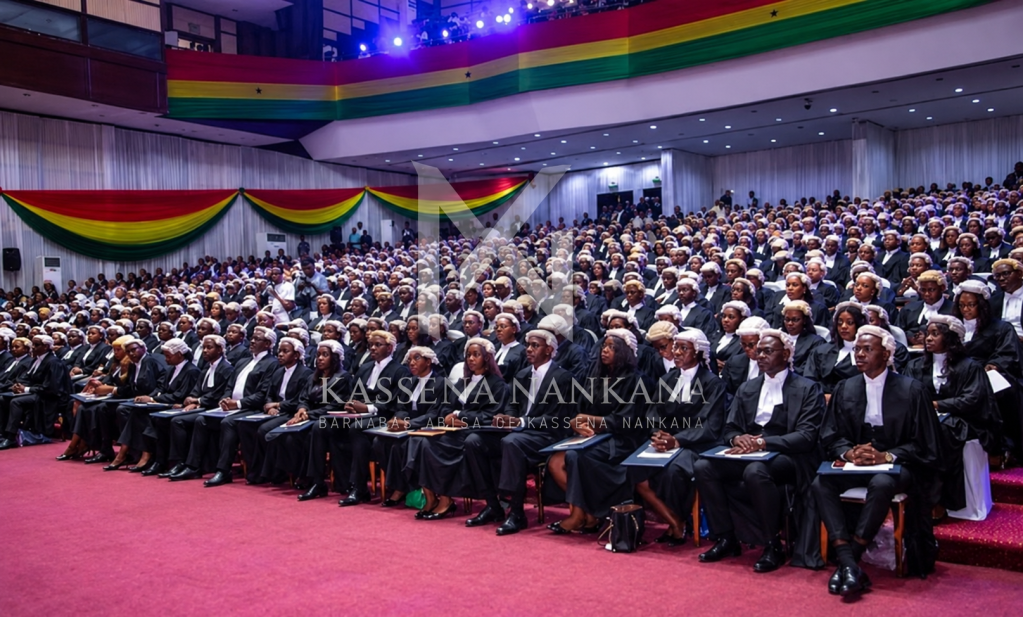
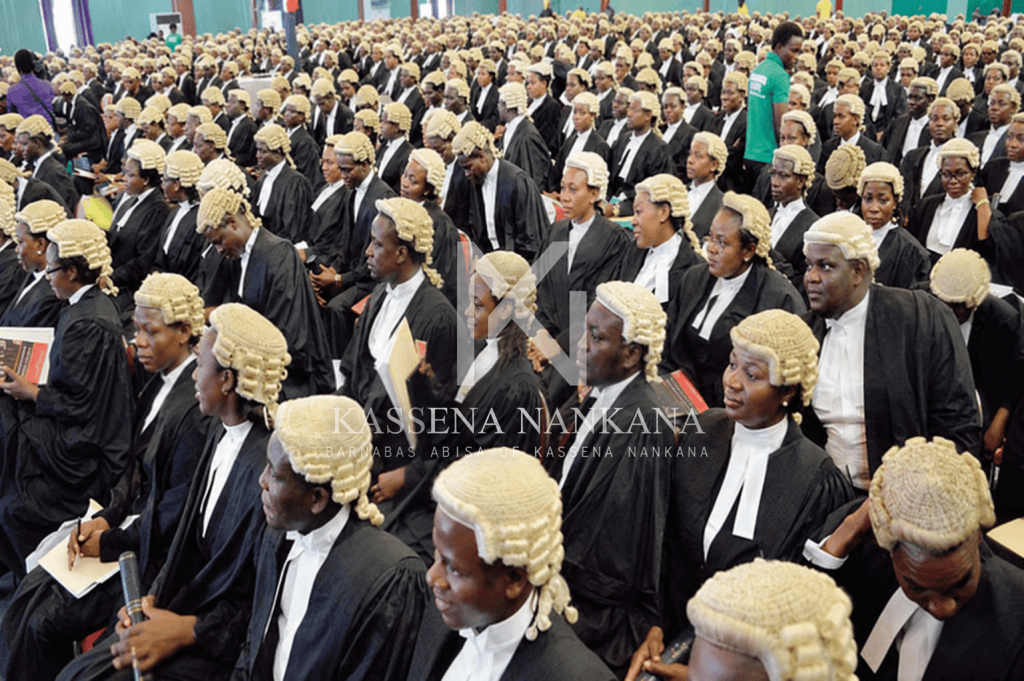
About 1,500 lawyers were called to the Ghana Bar last week. As has become customary around this time of the year, their admission has sparked the familiar debate about whether Ghana is producing too many lawyers. I have heard people argue that a country that produces more lawyers than engineers and doctors cannot be serious about its development. Then there are those already in the profession who appear threatened by the arrival of so many new lawyers.
When I was called to the Bar 23 years ago, we were a little over 100 lawyers, and even that number was considered large. For me, however, the question is not whether Ghana is producing too many lawyers. In fact, as far as I am concerned, there is room to produce many more lawyers. The United Kingdom, with a population of about 69 million, has about 200,000 legal professionals. Ghana, with a population of approximately 35 million, has a considerably smaller legal profession. Even allowing for differences in economic size and the structure of the legal services market, I am not persuaded that Ghana has reached the point where it should be worried simply about the number of lawyers being trained.
In any case, what is wrong if everyone wants to study law? Legal education is also a form of education. I would rather we had educated people working as taxi drivers, traders, artisans and in other occupations than people who have been denied the opportunity to acquire further education. A law degree does not necessarily oblige its holder to practice law. I therefore congratulate the Class of 2026 on their successful call to the Bar. My real concern is different. What is motivating the growing frenzy to become a lawyer in Ghana?
Have we made lawyers the custodians of national discourse?
From my reading of the landscape, it would appear that we have created the impression that only lawyers are smart enough to participate meaningfully in national discourse. Increasingly, the minimum qualification for expressing an opinion on radio, television or in the public square appears to be that one must be a lawyer. Just scan the leading radio and television stations during peak hours and you will understand what I mean. Almost every political discussion is now turned into a legal discussion. Lawyers are invited to pontificate on matters that have little to do with law, while technical legal arguments are conducted on radio and television as though the programs were classrooms in a law school.
What is particularly interesting is that, in many instances, what some of these lawyers present as the position of the law is little more than a mixture of half-truths, selective interpretations and personal opinions. Radio and television hosts have helped to feed this frenzy by turning virtually every national issue into a legal question. Whether the subject is flooding, fire outbreaks, sanitation, street hawking, public administration or economic policy, the discussion somehow ends up with lawyers explaining the law.
Of course, these matters may have legal dimensions. But they also have engineering, economic, environmental, administrative, sociological and other dimensions. Why should the lawyer always be the dominant voice? Take the ongoing constitutional review process. This is not, and should never be, the exclusive domain of lawyers. The 1992 Constitution belongs to every Ghanaian. Its review should provide an opportunity for citizens from every walk of life to discuss the kind of country they want and the institutions through which they wish to be governed. There is certainly a place for lawyers in that process, particularly in relation to legal implications, procedure and drafting. But constitutional reform is fundamentally about how we organise our political, economic and social lives. Economists, political scientists, historians, engineers, teachers, businesspeople, traditional authorities, civil society organisations and ordinary citizens must have an equal opportunity to contribute. Unfortunately, the way some journalists frame these discussions gives the impression that constitutional reform is principally a legal exercise.
When journalists themselves must become lawyers
Somehow, journalists also appear to have been convinced that the ultimate professional qualification for a serious journalist is a law degree. Look across our media landscape. A growing number of prominent journalists have become lawyers or are enrolled in law schools. There is absolutely nothing wrong with journalists studying law. Indeed, additional education can improve their understanding of public affairs and make them better at their work. My concern is what happens afterwards.
As soon as some journalists become lawyers, they begin to wear the qualification on their sleeves. Legal jargon suddenly finds its way into ordinary political discussions. Latin maxims are dropped into conversations where they add little value, and issues that should be explored through careful journalistic questioning are turned into legal arguments. A number of non-lawyers on panels have often resigned themselves to the now popular refrain, “As for me, I am not a lawyer.” Recently, I heard a senior journalist who has since become a lawyer say during a political discussion that he was taking “judicial notice” of a fact being discussed. Judicial notice is a recognised legal mechanism by which a judge presiding over a court may accept certain facts without requiring formal proof. It is not something a journalist exercises merely by announcing it on television or radio.
The example may appear trivial, but it illustrates a broader problem. We are increasingly confusing the language of law with the substance of public reasoning. A good journalist does not need to be a lawyer to ask intelligent questions, interrogate public policy, expose wrongdoing or hold public officials accountable. Journalism is a profession in its own right, with its own body of knowledge, ethics, methods and expertise. We should not create the impression that journalism becomes respectable only when accompanied by a legal qualification.
Is a law degree becoming a political qualification?
What is even more disturbing is the growing impression among politicians and aspiring politicians that the minimum qualification for climbing the political ladder is to become a lawyer. Over the last couple of years, I have had the privilege of participating in interviews of prospective students seeking admission into legal education in Ghana. One of the popular questions asked is simple: Why do you want to study law? The answers have sometimes been surprising and revealing. Let me be clear. Nobody needs a special reason to study law. It is perfectly legitimate to pursue legal education for personal development or self-actualization. However, increasingly, I hear prospective students say that they want to become lawyers simply because they intend to enter politics.
I have also encountered students whose attitude towards their legal education suggests that acquiring the certificate and the title matters more to them than acquiring the knowledge. There have been instances where students who have failed examinations have pleaded to be passed because, as they put it, they do not intend to practise law. They only want to become lawyers so that they can pursue political careers. On another occasion, I was advising a student whose academic performance had been consistently poor. I wanted to understand the difficulties he was experiencing and explore how he could improve. He told me not to worry about his grades. All he wanted was to pass his examinations and be called to the Bar. These experiences are troubling. They suggest that, for some students, legal education is becoming less about acquiring knowledge and professional competence and more about obtaining a certificate and the social recognition associated with being called a lawyer.
This is where legal educators, lawyers and society generally must be careful about the kind of lawyers we are producing.
Imagine if people decided to study medicine, not because they were interested in medical science or caring for patients, but because they believed the title of medical doctor would make them better journalists or politicians. Eventually, some would find themselves in consulting rooms or operating theatres, and the consequences of inadequate professional preparation could be devastating. The legal profession also carries serious responsibilities. Lawyers advise businesses, protect rights, structure transactions, represent clients in court and influence decisions that affect livelihoods and investments. Legal education cannot be treated merely as a route to social prestige.
The legal market is changing, but are we preparing for it?
The legal profession, like many others, is changing rapidly. First, globalization made it increasingly possible for lawyers to provide services across national boundaries, sometimes raising difficult questions about local professional regulation and unauthorized practice. In Ghana, we have long faced the challenge of foreign lawyers who fly in and out to advise multinational companies and participate in transactions that require substantial knowledge of Ghanaian law. Most of this work ought to be provided by Ghanaian lawyers.
Today, artificial intelligence is adding another dimension to that challenge. Foreign lawyers and international firms can increasingly access Ghanaian legislation, judicial decisions and other legal materials remotely, and use technology to undertake preliminary legal research and analysis without necessarily engaging local counsel to the extent previously required. There are, of course, limits to what foreign lawyers and artificial intelligence can properly or reliably do under Ghanaian law. But the competitive threat is real.
I have encountered concerns from multinational businesses about the capacity of some Ghanaian lawyers to handle complex and sophisticated transactions. Consider also international arbitration involving Ghanaian interests. Even where the dispute turns substantially on Ghanaian law, foreign law firms frequently play leading roles.
This should concern us. We need lawyers who can compete in an increasingly sophisticated and international legal services market. We need lawyers who understand complex financing arrangements, cross-border transactions, emerging technologies, natural resources, international arbitration and the regulatory challenges of modern business. If we are producing lawyers whose principal ambition is to acquire a title, enter politics or participate in political discussions on radio and television, we must ask whether our legal education system is sufficiently focused on the professional competence required in the market.
How many of those entering legal education genuinely want to develop the knowledge and skills necessary to compete in that market? And how many are responding primarily to the social frenzy surrounding the title of lawyer? These are questions worth examining, rather than simply counting the number of people called to the Bar each year.
Are we losing our entrepreneurs to the legal profession?
There is another dimension to this problem that worries me even more. Are we losing people who could become successful businessmen and businesswomen because we have created the impression that becoming a lawyer is a higher form of achievement?
During interviews for admission into an LLB programme this year, I encountered a prospective student who had been working with his parents in their retail business in one of the major towns in the Central Region. After completing his first degree, he returned home to help manage the family business. In his own words, he had helped transform what was previously a small “mom-and-pop” operation into a retail business generating a turnover of approximately GH¢1 million a month. When asked why he wanted to study law, he struggled to provide a reason.
There was another gentleman, a graduate of the Kwame Nkrumah University of Science and Technology, who had returned with his brother to their hometown in the Ahafo Region to help manage their mother’s bakery. They had transformed the business from an operation using approximately half a bag of flour a day into one using about 15 bags daily.
These are clearly enterprising young people with demonstrated business abilities. With appropriate financing, management skills and strategic support, they could potentially expand their family businesses into nationwide, and perhaps even sub-regional enterprises. Yet here they were, seeking admission to study law. I am not suggesting that they should be denied the opportunity. Nor am I suggesting that studying law would necessarily prevent them from continuing to grow their businesses. A legal education may even be useful to their entrepreneurial activities. My concern is whether they are pursuing law because it will help them achieve their ambitions or because society has made them feel that their considerable achievements in business are somehow incomplete without the title of lawyer.
This is when we should begin to worry. Ghana needs people who create businesses, employ workers, develop products, improve production, expand markets and generate wealth. We should be celebrating the young entrepreneur who transforms a small family bakery into a major food-processing enterprise just as much as we celebrate the young person who is called to the Bar. We should not encourage our brightest engineers, entrepreneurs and other professionals to abandon productive careers simply to pursue legal qualifications for social recognition.
Yes, engineers, doctors, nurses, teachers, accountants, plumbers and businesspeople can study law and return to their original professions. There is nothing inherently wrong with that. But Ghana is a developing country in a hurry. We cannot afford to create a culture in which people feel compelled to interrupt productive careers merely to acquire a professional title that society has elevated above others. Among the approximately 1,500 people called to the Bar last week is a public figure who has openly explained that his decision to study law was influenced by an experience on a political discussion programme. According to his account, an opposing politician told him to keep quiet because he was not a lawyer. At the time, he was already an engineer and a relatively young, accomplished politician. Yet that encounter contributed to his decision to spend several years pursuing legal education. I wonder what becoming a lawyer will add to his already illustrious career. Only time will tell.
But the larger question remains: Why should an engineer and an accomplished politician ever be made to feel that he cannot contribute meaningfully to national discourse unless he is also a lawyer?
Let us value knowledge, not merely titles
Let me conclude by turning to my first point. I am not worried about Ghana producing too many lawyers. I stand by that position. What worries me is the possibility that we are producing lawyers for the wrong reasons while diminishing the value of other professions and other forms of expertise. A country needs competent lawyers, but it also needs competent engineers, doctors, journalists, entrepreneurs, economists, scientists, teachers, artisans and public administrators. Not every public problem is principally a legal problem. Not every national conversation requires a lawyer. And not every intelligent Ghanaian needs to become a lawyer to be heard.
The media must make a conscious effort to bring the appropriate expertise to public discussions. And as a society, we must learn to celebrate achievement in every field. The young person who builds a successful manufacturing business is no less accomplished than the young person who becomes a lawyer. The engineer who designs a drainage system that prevents flooding may contribute more to solving that particular national problem than a panel of lawyers debating responsibility for the flood on television.
By all means, let us train more lawyers. Let us even encourage more Ghanaians to study law. But let us stop creating the impression that everyone must become a lawyer before they can be considered intelligent, successful or qualified to contribute to the development of Ghana.
By: Dr. Kweku Ainuson
Department of International Legal Studies
University of Ghana School of Law
Partner, AB Lexmall & Assocaites

